Most premature ball valve failures are material problems: a body that corrodes, a seat that softens at temperature, or a lining used beyond its limits. Material selection starts with four facts – media, concentration, temperature and pressure.
Body materials
| Material | Strengths | Watch out for |
|---|---|---|
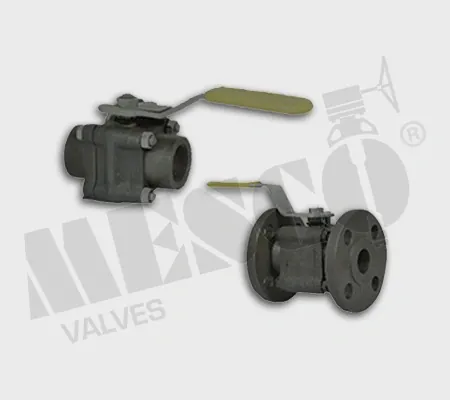
| Carbon steel / A105 | Strong, economical, weldable; hydrocarbons, steam, air | Corrodes in wet acidic or chloride service |
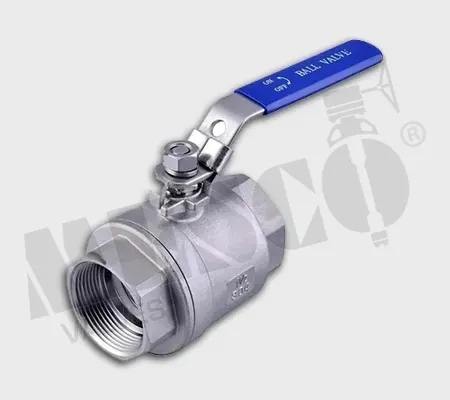
| SS304 / SS316 | Corrosion resistant, clean; chemicals, water, food, pharma | Chloride pitting in 304; cost |
| Duplex (F51) | High strength, chloride stress-corrosion resistance | Cost, availability |
| Alloy steel (F22) | Elevated temperature strength | Not corrosion resistant |
| Nickel alloys (Inconel, Monel, Hastelloy) | Severe corrosive service | High cost |
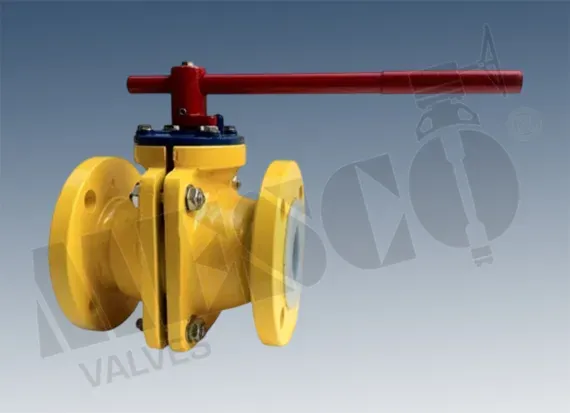
| PTFE lined | Broad chemical resistance at moderate cost | Temperature, vacuum and abrasion limits |
Seat materials
- PTFE – excellent chemical resistance, low friction; limited temperature and pressure.
- RPTFE (reinforced) – better strength and temperature range; a common default for process service.
- PEEK – higher temperature and pressure; used for steam and high-pressure duties.
- Graphite / metal – high temperature service.
- Viton, NBR – elastomer seals for specific media.
The valve's real rating is the lower of the body rating and the seat rating at operating temperature.
Practical selection checklist
- Identify media and concentration – check compatibility of body, ball, seat and seals.
- Confirm maximum temperature – choose a seat rated above it.
- Confirm pressure class – match to the piping class.
- Check for special conditions – sour service, oxygen, chlorides, abrasives, vacuum.
- Consider welding – use “L” grades of stainless for welded ends.
Share these details in your enquiry and our engineers will recommend a material combination.