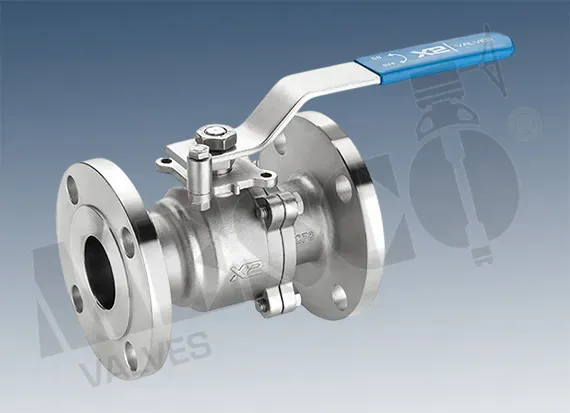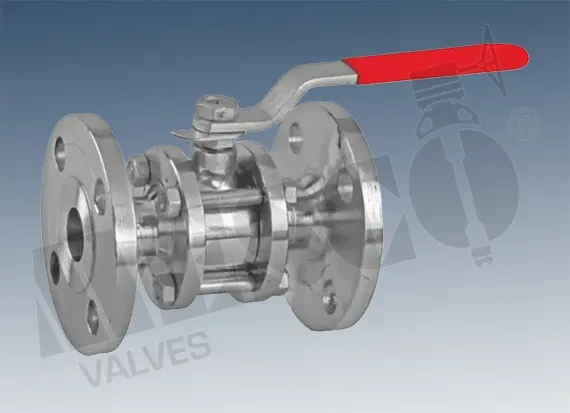
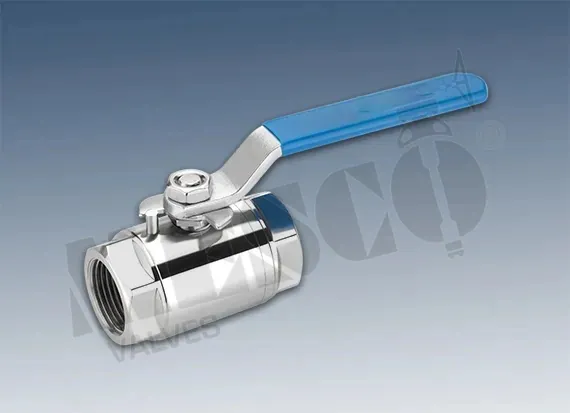
Quick specifications
- BoreFull port / reduced port
- BodySS, CS, forged
- EndsScrewed, flanged, SW, BW
- Size range¼" to 24"
- OperationManual or actuated
The bore of the ball decides how much the valve restricts flow. In a full bore ball valve (full port), the ball bore equals the pipe inside diameter, so the open valve behaves like a straight pipe. In a reduced bore ball valve (standard / reduced port), the bore is typically one pipe size smaller, which makes the valve lighter and cheaper.
When to choose full bore
- Pipelines that need pigging or cleaning.
- Viscous media and slurries where restriction causes blockage.
- Pump suction lines and gravity lines where pressure drop matters.
- Lines where flow measurement needs undisturbed flow.
When reduced bore is sufficient
- Clean liquids and gases in general isolation duty.
- Utility, drain and vent lines.
- Applications where small additional pressure drop is acceptable and cost or weight matters.
Read the detailed comparison in full bore vs reduced bore ball valves.
Full Bore & Reduced Bore Ball Valve – technical specifications
| Bore types | Full bore (full port), reduced bore (standard port) |
|---|---|
| Body material | SS304 / SS304L, SS316 / SS316L, SS410, Duplex SS; Carbon Steel, ASTM A105 (forged) |
| Size range | ¼" to 24" depending on design |
| Pressure rating | ASME Class 150 to 2500 / PN16 to PN420 |
| End connections | Flanged (ANSI / DIN / BS), Screwed BSP / NPT, Socket Weld, Butt Weld |
| Seat & seals | PTFE, RPTFE, PEEK, Graphite; seals in Viton or NBR |
| Operation | Lever, Gearbox, Pneumatic, Electric, Hydraulic |
| Testing | API 598 / API 6D / BS EN 12266 / ISO 5208, as applicable |
Ranges shown cover the product family. The exact rating, size and temperature limit for your valve depend on body material, seat material and design, and are confirmed in our quotation and datasheet.
Key benefits
- Full bore: minimum pressure drop and piggable
- Reduced bore: lighter, more economical
- Same quarter-turn tight shut-off
- Available across 2-piece, 3-piece and flanged designs
Applications
Industries served
Frequently asked questions
What is the difference between full bore and reduced bore ball valves?
In a full bore valve the ball bore equals the pipe ID; in a reduced bore valve it is smaller, usually one size down, causing a little more pressure drop.
Is a full bore ball valve more expensive?
Yes. The larger ball and body increase material and weight, so full bore valves cost more than reduced bore valves of the same line size.
Which bore is better for slurry?
Full bore, because the unrestricted passage reduces the risk of blockage and erosion.