Quick specifications
- Port typeL-port / T-port
- EndsScrewed, flanged
- BodySS304, SS316, CS
- OperationLever, pneumatic, electric
- FunctionDivert / mix / distribute
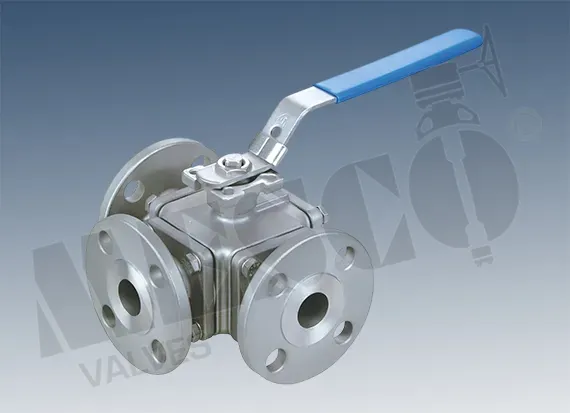
A three way ball valve has three ports and a ball drilled in an L or T pattern. One valve can switch flow between two outlets, combine two inlets, or isolate a branch – replacing two or three two-way valves and simplifying piping.
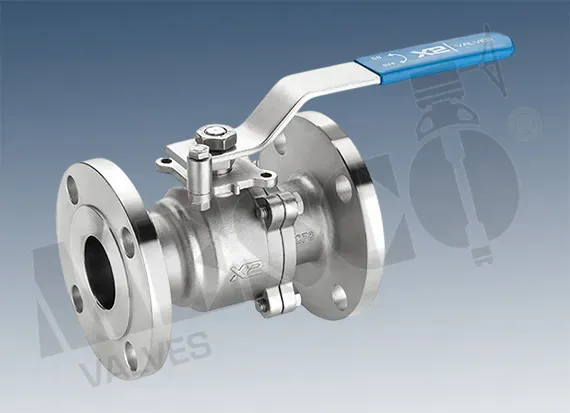
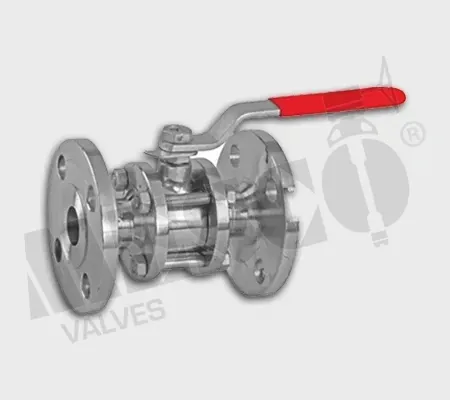
As a three way ball valve supplier in India, we manufacture 3-way valves in stainless and carbon steel with screwed or flanged ends, manual or automated.
L-port vs T-port
| Ball | Flow paths | Typical use |
|---|---|---|
| L-port | Connects the bottom port to either side port; can shut off in some positions | Switching between two tanks, pumps or filters |
| T-port | Can connect all three ports, or any two | Mixing, distribution and bypass |
Always specify the required flow pattern and rotation (90° or 180°) – the position diagram decides how the valve is drilled and stopped.
Automating 3-way valves
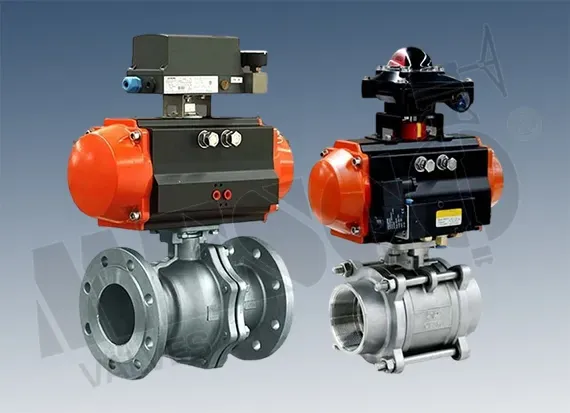
Three-way valves are frequently automated for diverting duty in skids, CIP systems and dosing. With a pneumatic actuator or electric actuator, a single signal switches the flow path. Limit switch boxes provide position feedback to your PLC.
Three Way Ball Valve – technical specifications
| Body material | SS304 / SS304L, SS316 / SS316L, SS410, Duplex SS; Carbon Steel, ASTM A105 (forged) |
|---|---|
| Port configuration | L-port, T-port |
| Size range | Screwed and flanged sizes as per enquiry |
| End connections | Screwed BSP / NPT, Flanged ANSI / DIN / BS |
| Seat & seals | PTFE, RPTFE, PEEK, Graphite; seals in Viton or NBR |
| Operation | Lever, pneumatic, electric actuator |
| Temperature | –29 °C to +550 °C body range; actual limit set by seat and seal material |
| Testing | API 598 / API 6D / BS EN 12266 / ISO 5208, as applicable |
Ranges shown cover the product family. The exact rating, size and temperature limit for your valve depend on body material, seat material and design, and are confirmed in our quotation and datasheet.
Key benefits
- One valve replaces two or three
- Saves space and pipe fittings
- Flexible flow patterns
- Easy to automate for switching duty
- Corrosion-resistant construction
Applications
- Diverting flow between pipelines in chemical plants
- Mixing or distributing water in treatment plants
- Fluid distribution in power plants
- HVAC and utility circuits
- Automated process skids
Industries served
Frequently asked questions
What is a three way ball valve?
A valve with three ports that diverts, mixes or distributes flow. It is available in L-port and T-port configurations.
What is the difference between L-port and T-port?
An L-port connects the common port to one of two outlets. A T-port can also connect all three ports at once, for mixing or distribution.
Can three way ball valves be automated?
Yes, with pneumatic or electric actuators and optional limit switch boxes.