Quick specifications
- MaterialsA105, F304, F316, F51, F22
- Pressure class150 – 2500 / PN16 – PN420
- Size range½" to 24"
- DesignFloating & trunnion mounted
- TestingAPI 598 / API 6D
Forging compresses heated steel into shape under very high pressure, producing a dense, uniform grain structure without the porosity that can occur in castings. That makes a forged steel ball valve the preferred choice for high-pressure lines, hydrocarbon service and critical isolation duties.
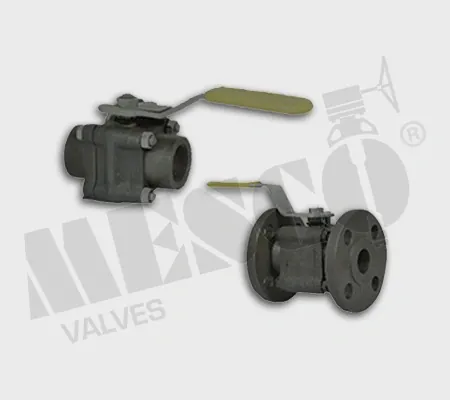
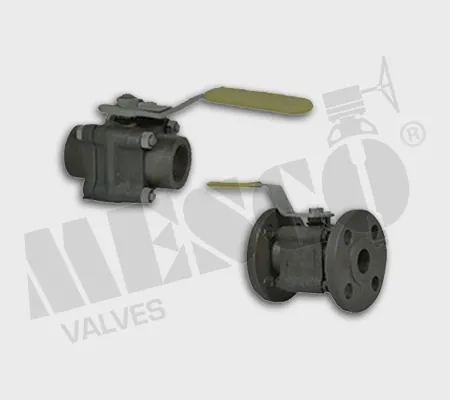
Under the MESCO brand, we manufacture forged ball valves in floating and trunnion-mounted designs, with flanged, threaded, socket weld and butt weld ends.
Forged material options
- ASTM A105 – carbon steel for hydrocarbons, steam and utilities.
- F304 / F316 – forged stainless for corrosive and hygienic duties.
- F51 – duplex stainless for chloride and high-strength service.
- F22 – chrome-moly alloy steel for elevated temperatures.
- Inconel, Monel, Hastelloy – nickel alloys for severe corrosive service, on request.
Floating or trunnion design?
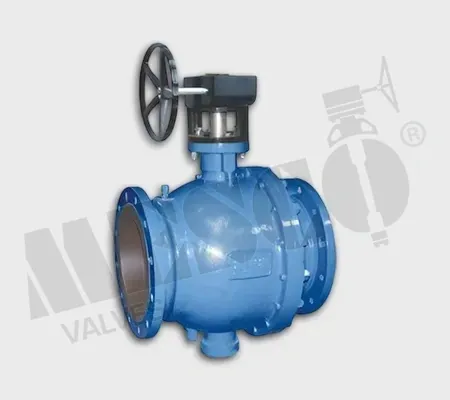
In a floating ball valve the ball is held by the seats and pushed by line pressure onto the downstream seat – simple and compact, ideal for smaller sizes. In a trunnion-mounted ball valve the ball is anchored top and bottom, so operating torque stays low even at high pressure and in large sizes. Read floating vs trunnion ball valves for a detailed comparison.
Where forged ball valves are used
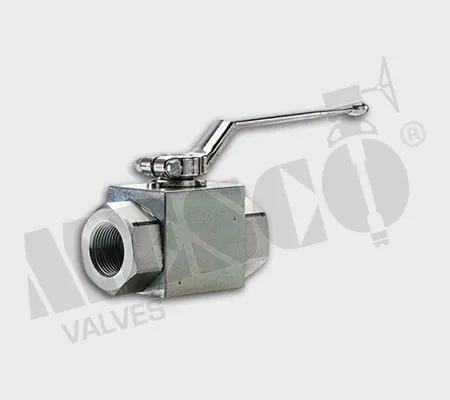
Forged ball valves are specified in refinery and petrochemical units, gas pipelines, steam systems, hydraulic and high-pressure utility lines and power plant auxiliaries – wherever strength and leak-tightness are critical.
Forged Steel Ball Valve – technical specifications
| Material | Carbon Steel, ASTM A105 (forged); F304, F316, F51, F22; Inconel, Monel, Hastelloy |
|---|---|
| Size range | ½" to 24" (15 mm to 600 mm) |
| Pressure rating | ASME Class 150 to 2500 / PN16 to PN420 |
| Design | Floating ball and trunnion mounted |
| End connections | Flanged (ANSI / DIN / BS), Screwed BSP / NPT, Socket Weld, Butt Weld |
| Operation | Lever, Gearbox, Pneumatic, Electric, Hydraulic |
| Temperature | –29 °C to +550 °C depending on material and seat |
| Testing | API 598 / API 6D / BS EN 12266 |
Ranges shown cover the product family. The exact rating, size and temperature limit for your valve depend on body material, seat material and design, and are confirmed in our quotation and datasheet.
Key benefits
- Dense, porosity-free forged body
- Higher pressure capability than equivalent castings
- Compact and lightweight for its rating
- Wide material choice from A105 to nickel alloys
- Custom designs as per client requirement
Applications
- Refinery and gas processing units
- High-pressure steam and power plant auxiliaries
- Hydrocarbon and chemical process lines
- High-pressure hydraulic and utility lines
Industries served
Frequently asked questions
What is the difference between forged and cast ball valves?
Forged valves are made from steel shaped under high pressure, giving a denser structure without casting porosity. They are preferred for small-bore, high-pressure and critical service.
What pressure ratings are available in forged ball valves?
ASME Class 150 to 2500 (PN16 to PN420), depending on size and design.
Do you offer forged trunnion ball valves?
Yes, forged ball valves are available in both floating and trunnion-mounted designs.
Related technical guides
- Floating vs Trunnion Mounted Ball Valve: Differences & Selection
- Ball Valve Material Selection: SS vs Carbon Steel vs Alloy