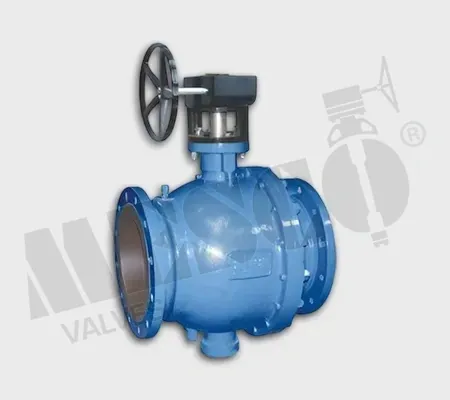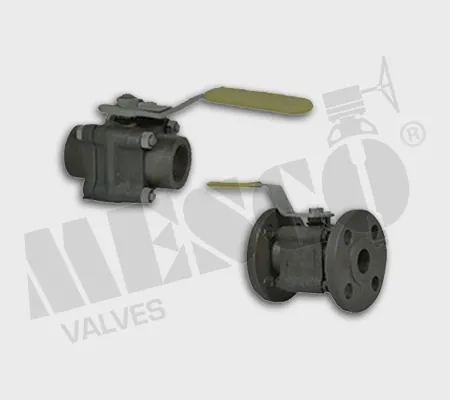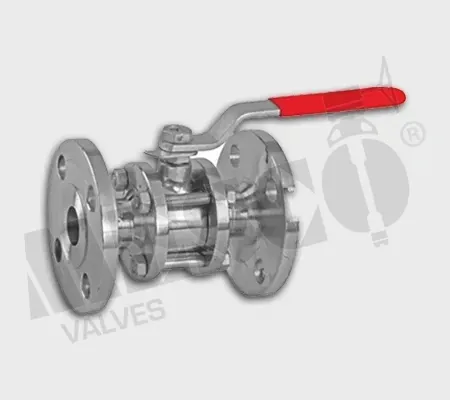
Once a ball valve gets bigger or the pressure class goes up, buyers face a choice: floating ball or trunnion mounted ball. The decision affects torque, actuator size, sealing behaviour and price.
How a floating ball valve seals
The ball is connected to the stem with a slot that lets it move slightly along the pipe axis. When the valve is closed, upstream pressure pushes the ball onto the downstream seat, creating the seal. Higher pressure means a tighter seal – but also higher friction, so operating torque rises with pressure and size.
How a trunnion mounted ball valve seals
The ball is fixed by the stem at the top and a trunnion at the bottom; it rotates but does not move. Seats are spring-loaded and pushed onto the ball by springs and line pressure. The trunnion bearings carry the pressure load, so torque is much lower and more stable.
Side-by-side comparison
| Factor | Floating | Trunnion mounted |
|---|---|---|
| Typical size | Small to medium | Medium to large |
| Pressure | Low to medium for larger sizes | Medium to very high |
| Torque | Higher, rises with pressure | Lower, stable |
| Actuator size | Larger for same size | Smaller |
| Seat wear | Downstream seat carries load | Load shared via trunnion |
| Cost | Lower | Higher |
Rules of thumb
- Small-bore lines at any class – floating ball valves are usually adequate and economical.
- Large sizes and higher classes – trunnion mounted.
- Automated valves – the lower torque of trunnion designs can allow a smaller, cheaper actuator.
- Pipelines needing double block and bleed – trunnion designs with spring-loaded seats are typical.
The exact cross-over point depends on size, class and seat material. Ask our engineers to compare both options for your duty.