Quick specifications
- GradesSS304/304L, SS316/316L, SS410, Duplex
- Size range¼" to 24"
- EndsScrewed, flanged, SW, BW
- SeatsPTFE, RPTFE, PEEK
- OperationLever, gear, actuated
As a stainless steel ball valve manufacturer in India, Shree Ganesh Engineering Works produces SS ball valves for lines where carbon steel would corrode or contaminate the product. Stainless steel gives the body, ball and stem resistance to water, mild acids, alkalis and most process chemicals, while keeping the media clean.
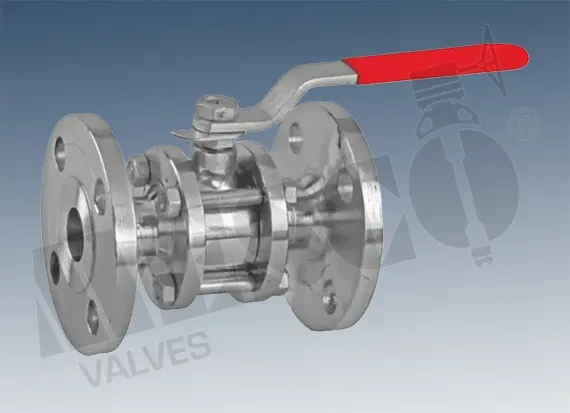
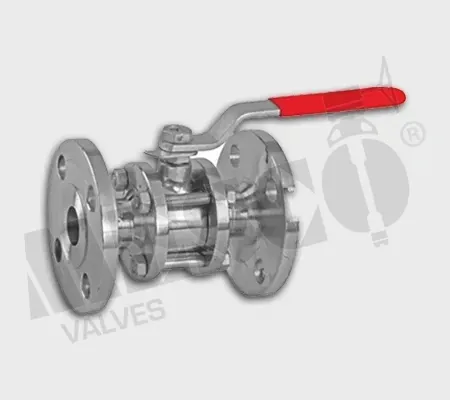
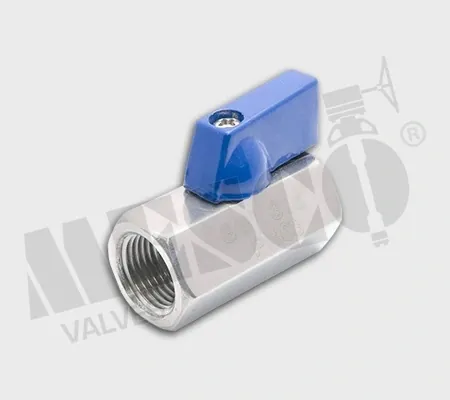
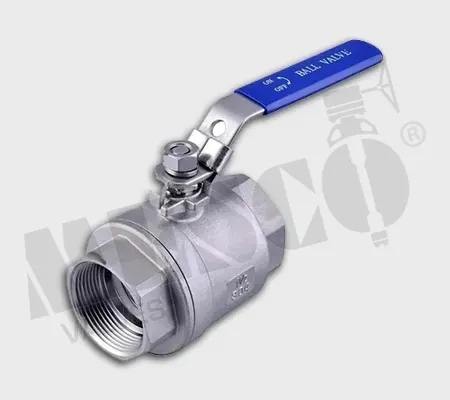
Our SS ball valves are available in one-piece bar-stock, two-piece and three-piece designs, with screwed, flanged, socket weld and butt weld ends – manual or with actuators.
SS304 vs SS316: which grade do you need?
| Grade | Typical use | Notes |
|---|---|---|
| SS304 / 304L | Water, air, mild chemicals, food-contact utilities | Economical general-purpose stainless. |
| SS316 / 316L | Chlorides, acids, pharma and food process lines, coastal plants | Molybdenum improves pitting resistance; “L” grades for welded ends. |
| SS410 | Trim components needing hardness | Martensitic; used for stems and balls where wear matters. |
| Duplex SS | High-chloride or high-strength duties | Higher strength and stress-corrosion resistance. |
For a detailed comparison of stainless, carbon and alloy steel, see our ball valve material selection guide.
Construction and working
A stainless steel ball valve uses a polished SS ball with a through-bore, held between two soft seats. Turning the lever or actuator 90° aligns the bore with the pipe (open) or turns it across the flow (closed). Because the seats wipe the ball on every stroke, the valve gives tight shut-off and is self-cleaning for most clean and mildly dirty fluids.
For welded-in installation, a three-piece SS ball valve lets you remove the centre body for maintenance without cutting the pipe. For flanged lines, choose a flanged SS ball valve.
Installation and maintenance tips
- Use 316L with welded ends to avoid sensitisation at the heat-affected zone.
- For three-piece valves, remove seats before welding or keep the body cool to protect PTFE.
- Avoid using ball valves for throttling – partial opening erodes soft seats.
- Re-tighten the gland nut lightly if the stem shows weeping after initial thermal cycles.
Stainless Steel Ball Valve – technical specifications
| Body / ball / stem | SS304 / SS304L, SS316 / SS316L, SS410, Duplex SS; CF grades on request |
|---|---|
| Size range | ¼" to 4" screwed; ½" to 24" flanged / forged |
| Pressure rating | ASME Class 150 to 2500 / PN16 to PN420; bar-stock screwed valves up to 6000 PSI |
| Seat & seals | PTFE, RPTFE, PEEK, Graphite; seals in Viton or NBR |
| End connections | Screwed BSP / NPT, Flanged ANSI / DIN / BS, Socket Weld, Butt Weld |
| Bore | Full bore and reduced bore |
| Operation | Lever, Gearbox, Pneumatic, Electric, Hydraulic |
| Temperature | –29 °C to +550 °C body range; actual limit set by seat and seal material |
| Testing | API 598 / API 6D / BS EN 12266 / ISO 5208, as applicable |
Ranges shown cover the product family. The exact rating, size and temperature limit for your valve depend on body material, seat material and design, and are confirmed in our quotation and datasheet.
Key benefits
- Excellent corrosion resistance for chemical and water service
- Clean, non-contaminating wetted parts
- Long service life in outdoor and coastal installations
- Available in welded, threaded and flanged versions
- Actuator-ready mounting for automation
Applications
- Chemical dosing and transfer lines
- Purified water and process lines in pharma plants
- Food, dairy and beverage processing
- Water and effluent treatment
- Instrument and sampling lines
Industries served
Frequently asked questions
Which is better, SS304 or SS316 ball valve?
SS316 contains molybdenum and resists chlorides and acids better. SS304 is economical for water, air and mild media. For pharmaceutical, food and chemical service, SS316 / 316L is usually preferred.
Do you manufacture stainless steel ball valves with flanged ends?
Yes. SS ball valves are available with flanged ends to ANSI, DIN or BS standards, as well as screwed, socket weld and butt weld ends.
Can stainless steel ball valves be used for steam?
Yes, with the correct seat. Standard PTFE seats are limited in temperature; for steam we recommend RPTFE, PEEK or graphite seats depending on pressure and temperature.
Can I get SS ball valves with a pneumatic actuator?
Yes. SS ball valves can be supplied with mounted pneumatic or electric actuators. See pneumatic actuated ball valves.