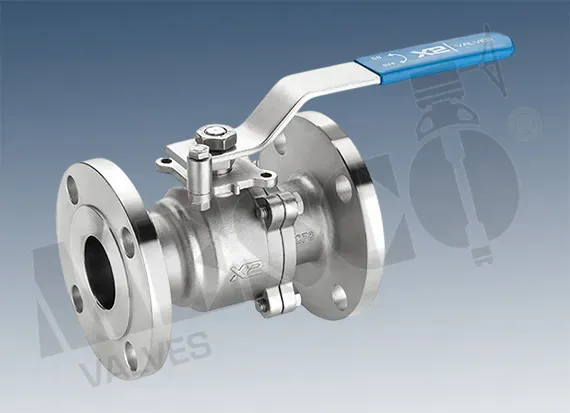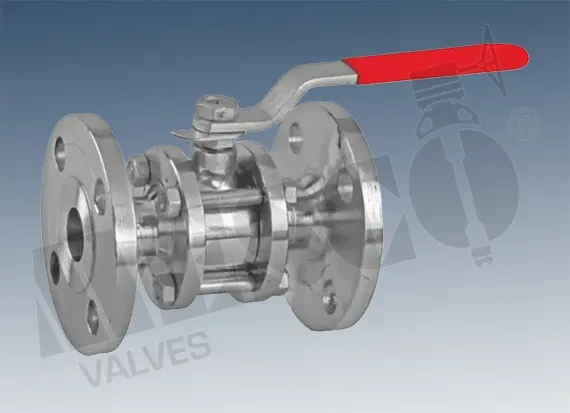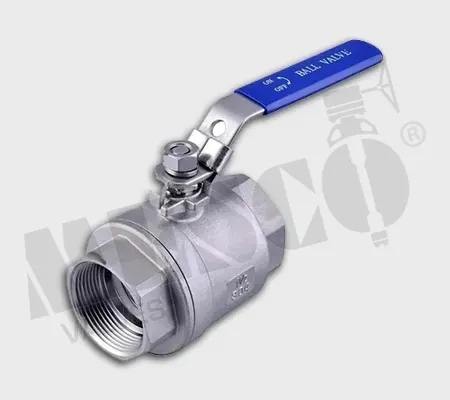
Two-piece and three-piece ball valves can have the same ball, seats and pressure rating. What differs is how the body is assembled – which affects maintenance, welding, leak paths and price.
Two-piece construction
A two-piece ball valve has a main body and an end connector screwed or bolted into it. To replace seats, the valve must be removed from the line and the end connector unscrewed. There is one body joint.
Three-piece construction
A three-piece ball valve has two end caps and a centre body joined by body bolts. With the end caps left welded or screwed into the pipe, the centre body swings out for servicing. There are two body joints.
Comparison
| Factor | Two-piece | Three-piece |
|---|---|---|
| Body joints / leak paths | One | Two |
| In-line maintenance | No | Yes |
| Welded ends | Less common | Ideal – remove centre body before welding |
| Cost | Lower | Higher |
| Typical use | General isolation, utilities | Process, pharma, food, welded lines |
Which should you choose?
Choose two-piece when the valve can be unscrewed or unbolted for maintenance and cost matters. Choose three-piece for welded lines, frequent maintenance, or hygienic service where internal access for cleaning is valuable.